
Analytics & Reporting
Data-driven Analytics & Reporting designed to track performance, uncover insights, measure results, and turn data into smarter business decisions.
What is Analytics & Reporting?
Analytics & Reporting is the process of tracking, analyzing, and presenting marketing data to measure digital performance and support smarter business decisions. It helps businesses understand what is working and where improvements are needed.
By monitoring website traffic, leads, conversions, engagement, and ROI through tools like Google Analytics and Google Search Console, businesses can identify trends, optimize their marketing strategies, reduce wasted spending, and achieve better results.
Regular reporting also provides a clear picture of progress over time, helping marketers measure the impact of their efforts and make data-driven decisions for sustainable business growth.
Service
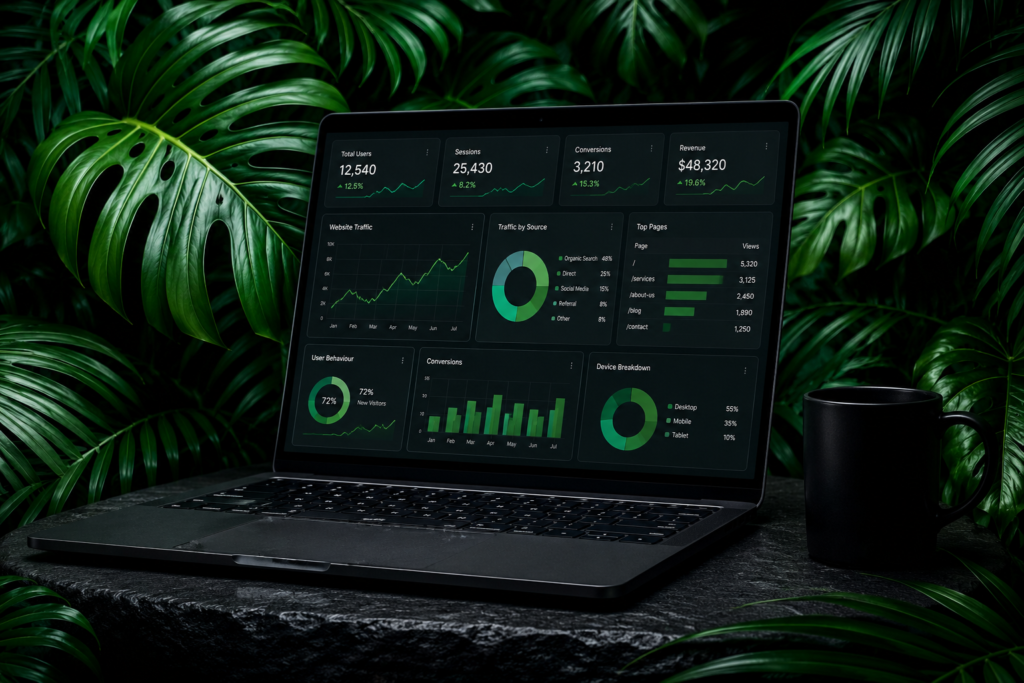
Performance Tracking
Track key metrics and KPIs to monitor your campaigns and overall business performance in real time.
Insightful Analysis
Uncover valuable insights from complex data to understand what’s working, what’s not, and opportunities to grow.
Custom Reports
Get customized, easy-to-understand reports tailored to your goals and business needs for better clarity.
Data-Driven Decisions
Use accurate data to make smarter strategies, improve efficiency, and maximize your marketing ROI.
Growth Optimization
Optimize campaigns and marketing efforts based on data insights to improve results and achieve sustainable growth.
Real-Time Reporting
Monitor performance in real time with live dashboards and reports to stay ahead of the competition.
How SEM helps to grow business in analytics & reporting?
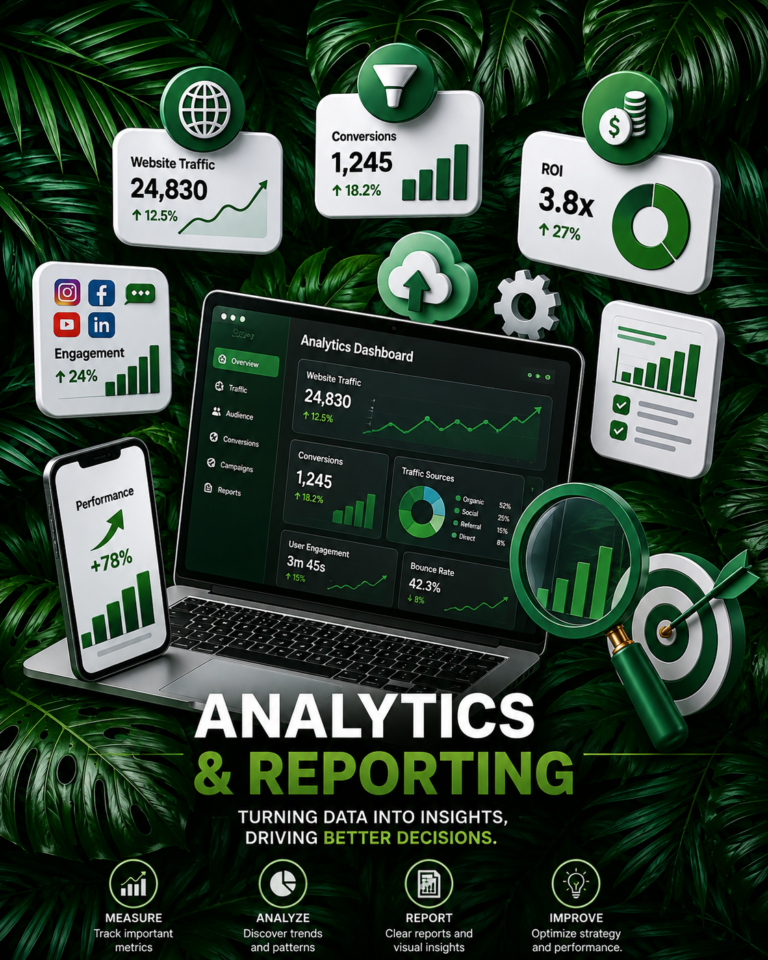
Search Engine Marketing (SEM) helps businesses reach potential customers when they are actively searching for products or services. When SEM is combined with analytics and reporting, businesses can clearly understand which campaigns, keywords, audiences, and advertisements are generating the best results.
Analytics tracks important metrics such as clicks, CTR, CPC, conversions, CPA, and ROAS, helping businesses measure campaign effectiveness. It also identifies high-performing keywords and audiences, allowing marketers to focus their budget on strategies that generate quality leads and sales.
Detailed reporting helps businesses control advertising costs, identify underperforming campaigns, optimize ad spend, and improve conversion rates. By analyzing customer behavior across devices, locations, and campaigns, marketers can make more accurate targeting and optimization decisions.
Most importantly, SEM analytics connects advertising spend with actual business outcomes such as leads, purchases, and revenue. This turns campaign data into actionable insights and helps businesses continuously improve performance, maximize ROI, and achieve sustainable growth.
Before You Get Started
What is Analytics & Reporting in Digital Marketing?
Analytics & Reporting is the process of collecting, analyzing, and presenting marketing data to understand how well digital campaigns and online activities are performing. It helps businesses measure important metrics such as traffic, engagement, leads, conversions, and overall campaign performance.
Why is Analytics & Reporting important for a business?
Analytics & Reporting helps businesses make decisions based on real data rather than assumptions. It shows which strategies are producing results, where improvements are needed, and how marketing resources can be used more effectively to achieve business goals.
What types of data can be tracked through analytics?
Analytics can track a wide range of information, including website visitors, traffic sources, page views, user behavior, social media engagement, clicks, impressions, leads, conversions, bounce rates, customer interactions, and campaign performance.
How does analytics help improve digital marketing campaigns?
Analytics provides insights into which campaigns, advertisements, keywords, content, and platforms are performing well. Marketers can use these insights to optimize their campaigns, adjust targeting, improve content, manage budgets, and focus more on strategies that generate better results.
What are the most important marketing metrics to track?
The most useful metrics depend on the business goal, but common metrics include website traffic, engagement rate, reach, impressions, click-through rate, conversion rate, cost per lead, return on investment, customer acquisition cost, and leads generated. Tracking the right metrics helps businesses measure meaningful performance.
How often should Analytics & Reporting be done?
Analytics should be monitored regularly, while detailed reports can be created weekly, monthly, quarterly, or according to the needs of the business. Regular monitoring helps identify problems quickly, while periodic reporting provides a broader view of growth and performance.
How does reporting help business owners?
Reporting transforms complex marketing data into an easy-to-understand format. It allows business owners to quickly see campaign results, identify growth opportunities, understand customer behavior, evaluate marketing investments, and make informed decisions about future strategies.
Can Analytics & Reporting help increase website performance?
Yes. Analytics can show how visitors interact with a website, which pages receive the most traffic, where users leave, and which pages contribute to conversions. These insights can help businesses improve website content, navigation, user experience, and conversion opportunities.
How does Analytics & Reporting help with social media marketing?
Social media analytics helps measure reach, impressions, engagement, follower growth, clicks, shares, comments, and other important activities. By analyzing these results, marketers can identify the type of content their audience prefers and develop more effective social media strategies.
What is the difference between Analytics and Reporting?
Analytics focuses on examining data to discover patterns, trends, problems, and opportunities, while reporting focuses on presenting the findings in a clear and understandable format. Analytics explains what the data means, while reporting communicates the results and helps stakeholders understand the recommended next steps.
Let’s Turn Your Vision Into Growth.
Let’s connect, understand your goals, and create the right digital marketing strategy to grow your business.