
Web Design
Building modern, responsive websites that look stunning and perform.
What is Web Design?
Web Design is the process of planning and creating a website’s visual appearance, structure, and user experience. It combines layout, typography, images, navigation, and functionality to create a website that is attractive, easy to use, and aligned with the brand.
A strong web design focuses on responsive design, user experience (UX), clear navigation, fast performance, and mobile compatibility. The goal is to make it easy for visitors to find information, engage with the brand, and take meaningful actions.
Ultimately, effective web design helps businesses build credibility, improve user engagement, generate leads, and create a strong online presence.
Service..
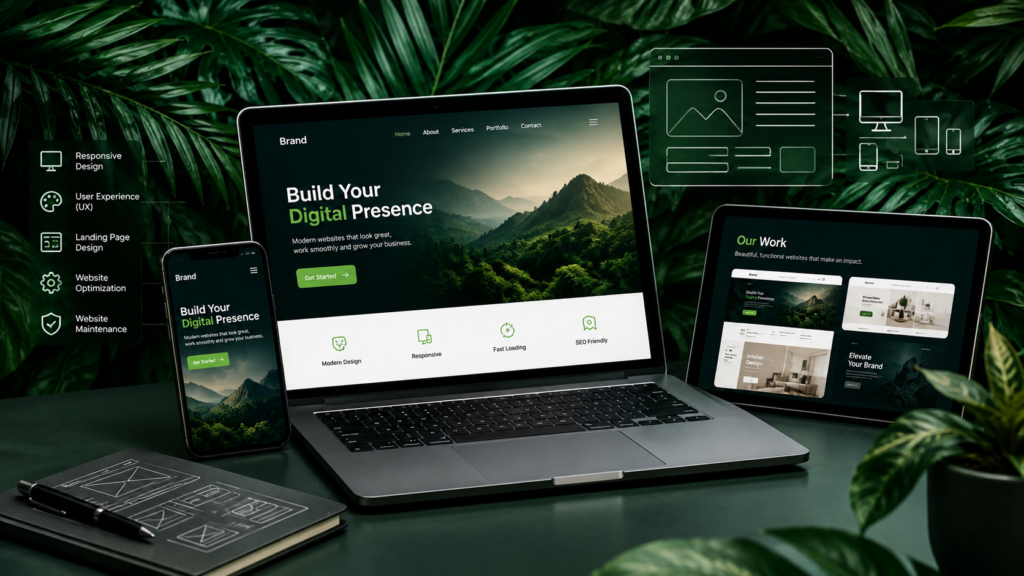
Website Design
Create modern, attractive, and professional website layouts that reflect your brand identity and provide visitors with a strong first impression.
Responsive Design
Design websites that adapt smoothly to desktops, tablets, and smartphones, ensuring a consistent and user-friendly experience across all screen sizes.
User Experience (UX)
Develop simple and intuitive website structures that make navigation easy, help visitors find information quickly, and create a smooth browsing experience.
Landing Page Design
Create focused and conversion-oriented landing pages designed to promote specific services, products, campaigns, or offers and encourage visitors to take action.
Website Optimization
Improve website speed, structure, usability, and overall performance to provide a faster and more efficient experience for visitors.
Website Maintenance
Keep your website updated, secure, functional, and fresh with regular content updates, improvements, and ongoing performance checks.
How SEM helps to grow business in Social Media Marketing ?
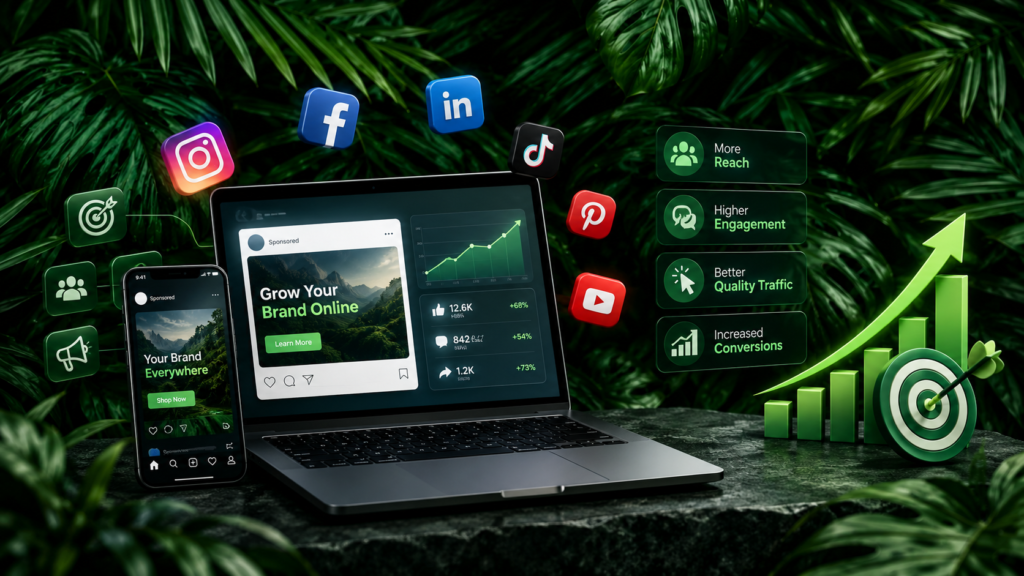
SEM and Web Design work together to turn paid traffic into conversions. While SEM brings potential customers to your website, effective web design keeps them engaged and encourages them to take action.
SEM provides insights into keywords, search intent, audience behavior, and ad performance. These insights can guide the creation of relevant landing pages with clear content, strong calls to action, and a smooth user experience.
A fast, mobile-friendly, and conversion-focused website helps reduce bounce rates and improve campaign performance. By analyzing traffic, conversions, and user behavior, businesses can continuously optimize their landing pages and website experience.
Ultimately, SEM brings the right audience, while Web Design turns visitors into customers—helping businesses improve conversions, reduce wasted ad spend, and achieve sustainable growth.
Before You Get Started
Why does my business need a professional website?
A professional website gives your business a strong online presence and helps potential customers understand your brand, products, or services. It can build credibility, provide important information, generate leads, and support your overall digital marketing strategy.
What makes a good website design?
A good website combines attractive visuals with easy navigation, clear content, responsive design, fast loading speeds, strong branding, and effective calls-to-action. The goal is to create a website that looks professional while making it simple for visitors to find information and take action.
Will my website work on mobile devices?
Yes. A modern website should use responsive design so that it adapts to different screen sizes. This ensures that visitors can comfortably browse your website on smartphones, tablets, laptops, and desktop computers.
How long does it take to design a website?
The timeline depends on the size and complexity of the website, number of pages, features, content, design requirements, and revisions. A simple business website may take less time, while larger websites with advanced functionality require more planning and development.
Can you design a website according to my brand?
Yes. A website can be customized around your brand identity, including your logo, colors, typography, imagery, tone, and overall visual style. This creates a consistent brand experience across your website and other digital platforms.
Is website design important for SEO?
Yes. Good web design can support SEO through mobile responsiveness, clear website structure, fast loading performance, user-friendly navigation, optimized content, and technically organized pages. Design and SEO should work together to provide a better experience for both users and search engines.
Can a website help generate leads and customers?
Absolutely. A website can be designed with conversion-focused elements such as contact forms, inquiry buttons, service pages, landing pages, calls-to-action, and strategically placed information. These elements can guide visitors toward becoming leads or customers.
Can I update the website after it is completed?
Yes. Depending on how the website is built, content such as text, images, blogs, services, and other information can be updated when needed. Regular updates can also help keep the website fresh, relevant, secure, and aligned with your business goals.
What is responsive web design?
Responsive web design is an approach that allows a website to automatically adjust its layout and content according to the visitor’s screen size. It ensures that the website remains easy to read and navigate across smartphones, tablets, laptops, and desktop computers.
Why should I invest in professional web design?
Professional web design can help your business create a strong first impression, establish credibility, improve user experience, and support marketing and conversion goals. A well-planned website can become a valuable long-term asset for attracting visitors, generating leads, and growing your business online.
Let’s Turn Your Vision Into Growth.
Let’s connect, understand your goals, and create the right digital marketing strategy to grow your business.